

Here is the whole idea, and it is a very good idea. You park the truck once. You unload the sled once. Then, for as many days as your body and your bank account will tolerate, you point that machine at a different mountain every morning and come back every night to a cabin in the trees and a pool of hot water steaming under the stars.
That place is Crazy Creek Resort, on the Trans-Canada Highway in Malakwa, British Columbia. Revelstoke is half an hour east. Sicamous is just down the road to the west. Between them sit eight riding zones and the kind of snowpack people out here describe with their hands, the way fishermen describe the one that got away. The difference is that the snow is real, and it will absolutely get away from you if you let it.
You will arrive the way everybody arrives: too much gear, too little sleep and a gas-station coffee the colour of a tar pit clamped between your knees like a holy relic. That’s fine. The mountains don’t care how you got here. They care whether you read the avalanche forecast. We’ll get to that, because it’s the one part of this guide that isn’t even a little bit funny.
The voice yelling from the margins belongs to our cook. The cook doesn’t ride. The cook has opinions.
The cook, from the stoveGas-station coffee isn’t a drink. It’s a confession. There’s a grocery store in Revelstoke. Buy real beans and a real thermos, you animals.
Why you sleep in the middle.
Most sled trips are a logistics problem wearing a vacation costume. You pick a town and ride its hills. Then the wind scours them or the forecast turns ugly, and you either sit there sulking or load everything up and drag it to the next town like a travelling circus with worse hygiene.
Crazy Creek solves this by being in the middle. Toward Sicamous are the four zones managed by Sled Sicamous, including Eagle Pass, about three minutes from your cabin door. Toward Revelstoke is Boulder Mountain, run by the Revelstoke Snowmobile Club, plus three unmanaged backcountry areas off the Wap Lake Forest Service Road.
Conditions better on one side? Go there. You don’t pack anything. You don’t check out of anything. This is what freedom looks like with a trailer hitch.
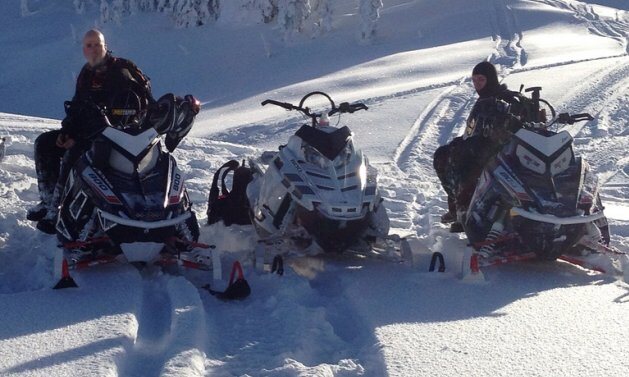
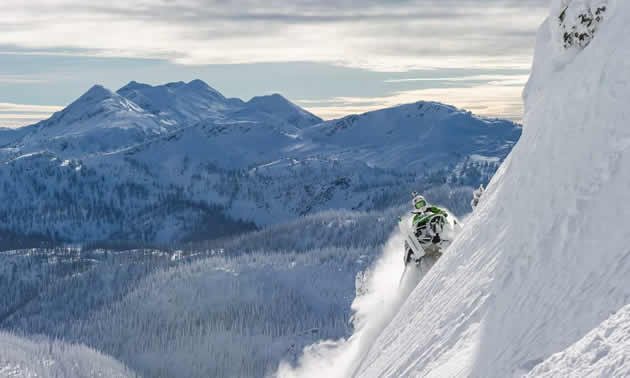
The eight zones, one by one.
Grouped by which way you point the truck. These are descriptions, not difficulty ratings. The mountain decides how hard your day is. We just tell you what’s up there.
Toward Sicamous
Managed by Sled Sicamous, the Eagle Valley Snowmobile Club, which has been looking after these hills since 1958. Trail passes required.
Owlhead
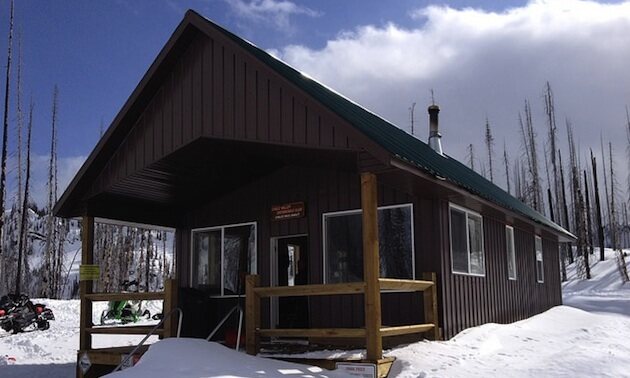
Varied terrain, groomed and ungroomed routes, and a club cabin for thawing your fingers and exaggerating your lines.
- Watch for
- The Kingfisher Ecological Reserve closure. It’s mapped. Ride around it.
- Staging
- Owlhead parking area, start of the Owlhead FSR.
Queest
The club’s oldest area. A meadow by the cabin, big views over the Eagle Valley on the way up, then steeper, more varied ground beyond.
- Watch for
- Ungroomed routes and cliff warnings on the club map. Cliffs are not a metaphor.
- Staging
- 1800 FSR in Sicamous.
Blue Lake
Groomed access into wide alpine and subalpine terrain, a cabin, and a training hill where beginners learn and veterans claim they’re just warming up.
- Watch for
- Past the grooming, it’s backcountry. Treat it that way.
- Staging
- End of Yard Creek Loop Road.
Eagle Pass
The big one. Large, steep alpine above 2,000 metres, and the reason half the people in the hot pool are talking with their hands. About three minutes from your cabin.
- Watch for
- Not recommended for novice riders. Check the club’s grooming and conditions before you go up.
- Staging
- Via Bowolin Road and the East Perry River FSR.
Toward Revelstoke
Boulder Mountain is managed by the Revelstoke Snowmobile Club. Griffin, Mt Begbie and Joss are unmanaged: no grooming, no cabin and no promise the access is open.
Boulder Mountain
A busy, well-built trail system: groomed access, bowls, technical trees and advanced ungroomed terrain the deeper you go.
- Watch for
- West Boulder Trailhead has no parking. Don’t be that truck.
- Staging
- RSC Welcome Centre, 4177 Westside Road.
Griffin
Low-angle ground, spaced trees, meadows and rolling hills. No grooming, no cabin, no babysitter.
- Watch for
- Motor vehicles are prohibited in the Mount Griffin Ecological Reserve next door.
- Staging
- Roadside on the Wap Lake FSR.
Mt Begbie
Smaller, technical and very easy on the eyes, reached from the Wap Lake FSR.
- Watch for
- Not the Highway 23 hiking trailhead. Check the Mount Macpherson seasonal motor vehicle closure.
- Staging
- Roadside on the Wap Lake FSR.
Joss
Enormous, wide-open alpine at the end of a long ride up the Wap Lake FSR, through old burn and forest. Joss rewards people who plan and punishes people who wing it.
- Watch for
- English Lake Provincial Park next door is non-motorized.
- Staging
- Roadside on the Wap Lake FSR.
The cook, waving a ladleEight mountains and you people will still stand in the parking lot arguing for forty-five minutes. Pick the one the forecast likes. Then eat something. You get stupid when you’re hungry.
Pay the people who groom your trails.
The managed zones exist because local clubs hold the agreements, run the groomers, keep the cabins standing and wade through the paperwork so you can go fast in the mountains. They charge trail fees for that work. Pay them happily. Somebody ran a groomer in the dark so you could have that corduroy.
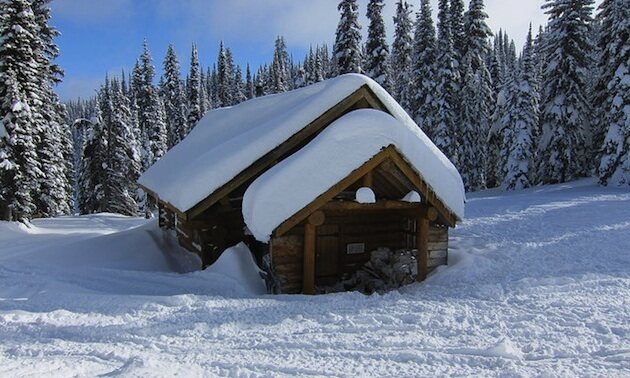
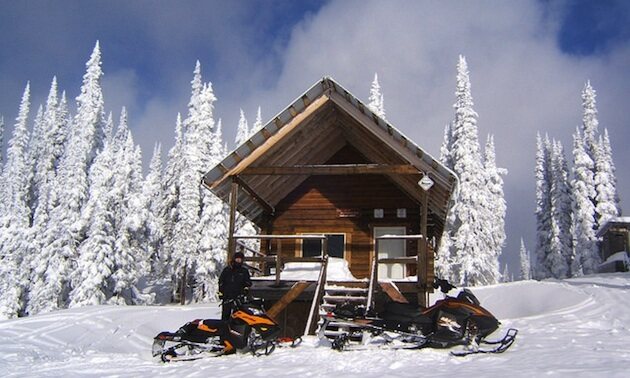
Sled Sicamous covers Owlhead, Queest, Blue Lake and Eagle Pass. The Revelstoke Snowmobile Club covers Boulder Mountain and Frisby Ridge. Fees change from season to season, so we’re not printing numbers that will be wrong by February. Check the club sites for current passes, then check the grooming report and the cabin cameras the morning you ride. The cameras don’t lie. Your buddy who says it’s probably fine up there does.
Both sides have mapped closures, including ecological reserves and wildlife habitat. They’re on the club maps. Respect them. The caribou were here first.
Now the part where we stop joking.
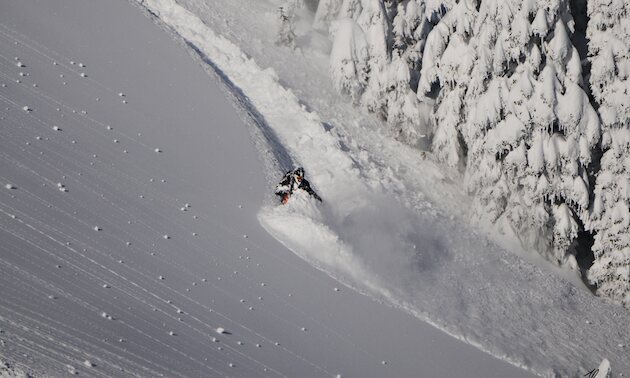
Avalanches kill snowmobilers in British Columbia. The terrain that makes this corner of the province famous is the same terrain that does it. Nobody is above this, including the rider with the sponsor stickers.
- Read the Avalanche Canada forecast for the region you’re riding, every single day, and check the Mountain Information Network for what other riders saw.
- Every rider carries a transceiver, shovel and probe, and knows how to use them. A beacon you’ve never practised with is an expensive necklace.
- Take an Avalanche Skills Training (AST 1) course before you ride the alpine. Sled-specific courses exist. Take one of those.
- Expose one rider at a time on slopes. Everyone else watches from a safe spot.
- Tell someone where you’re going and when you’ll be back. Don’t bet your life on cell coverage. Carry a satellite messenger.
- In the unmanaged zones, assume you’re on your own. You are.
The cook, quietly for onceWear the beacon. Read the forecast. Then come back and tell me about it.
Getting there without becoming a cautionary tale.
Crazy Creek is right on the Trans-Canada Highway, which is convenient until it isn’t. Winter brings closures, slow traffic and the occasional semi doing something creative. Check DriveBC before you leave and again before you drive home.
British Columbia requires winter tires or chains on most highways from October 1 to March 31, and on some mountain routes until April 30. If you’re towing a sled trailer over the Monashees on summer tires, the mountains will find out before you do.
The forest service roads up to staging are working roads: logging traffic, changing conditions and signs that matter. Drive them like there’s a loaded truck around every corner, because sometimes there is. Back at Crazy Creek, there’s plenty of room for trailers in the main lot, or pay a little extra for a powered spot beside the cabins.
Eat like you mean it.
Plan your food like an adult. Check what your cabin includes when you book, then do one proper grocery run in Revelstoke or Sicamous on the way in. Everything after that gets easier.
- Night one, make a giant pot of something: chili, stew, curry. Double it. Tomorrow’s lunch just made itself.
- Every morning, fill a wide-mouth thermos from that pot. Hot food at noon in the alpine is a religious experience.
- Pack more calories than seems reasonable. A day of riding in the cold burns through fuel, yours and the sled’s.
- Keep your water and chocolate inside your jacket. Frozen water is a rock. Frozen chocolate is a dental appointment.
- Drink water at the hot pools too. Hot water plus a dehydrated body equals the room spinning.
The cook, not even looking upYes, I know some of you wrap burritos in foil and warm them on the engine. It tastes like a burrito met a chainsaw. It is also, I’ll admit, the best thing you’ll eat all week. Bring the thermos anyway.
Three days, done right.
A suggestion, not a contract. Weather, avalanche conditions and your group’s skills get the final vote.
Arrive and soak.
Drive in, park the trailer, unpack the cabin. Buy trail passes, read tomorrow’s forecast, lay out your gear. Hot pools until 10 pm. Asleep by 10:01.
Ride the Sicamous side.
Warm up at Blue Lake or Queest: groomed access, a cabin for lunch, big views. Ride to the level of your least experienced rider. Back to base and straight into the pools.
Choose your mountain.
Experienced, avalanche-trained and the forecast agrees? Eagle Pass is three minutes away. Otherwise head toward Revelstoke for Boulder Mountain’s trail system. One last soak before the drive home.
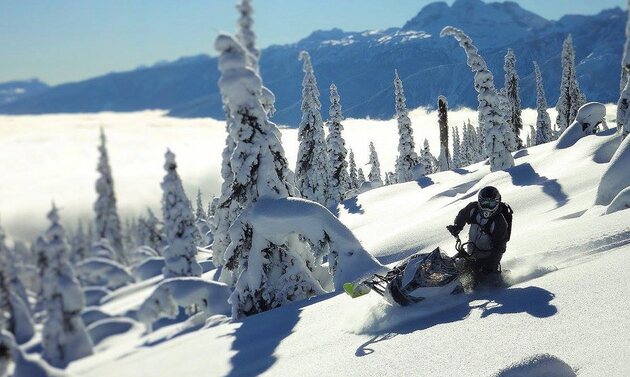
No sled? Want a guide?
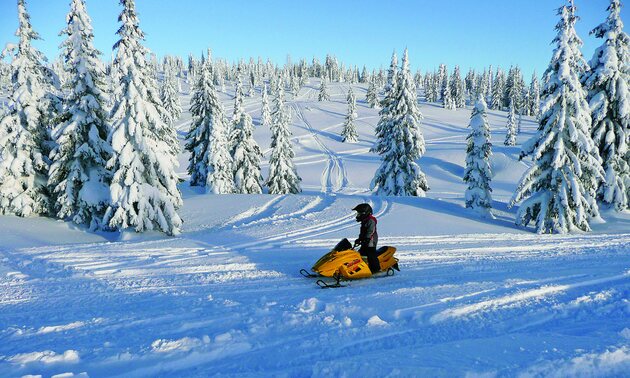
Carl Kuster Mountain Park is a separate local operator that runs guided snowmobile days, with a sled rental option, plus trips for riders who bring their own machines. If you’re new to sledding, new to the area or just want someone who knows where the good snow is hiding, book them. Talk to them directly about what’s included. Crazy Creek’s job is the cabin and the hot water.
Pack this.
Sled & safety
- Avalanche transceiver, shovel and probe
- Avalanche airbag pack, if you have one
- First-aid kit
- Tow strap and basic tools
- Spare drive belt and spark plugs
- Satellite messenger
- Club maps on your phone or GPS
- Your trail pass
You
- Helmet, goggles and a spare lens
- Waterproof shell and bibs
- Warm layers, no cotton
- Two extra pairs of gloves
- Balaclava or neck gaiter
- Hand warmers
- Sunscreen. Snow glare is brutal.
Cabin & kitchen
- Groceries for every meal
- Wide-mouth thermos
- Insulated water bottle
- Swimsuit for the hot pools
- Slippers or camp shoes
- Something to dry boots and gloves
- Cards, for the nights the wind wins
Seven rules for the road.
- The mountain doesn’t know your name. Read the forecast anyway.
- Pay the club. The corduroy didn’t groom itself.
- One rider at a time on the slope. Everybody watches.
- If the access road looks like a bad idea, it is.
- Eat before you’re hungry. Drink before you’re thirsty.
- Closed means closed.
- End every day in hot water. This one is not optional.
That’s the guide. Eight mountains, one parking spot, a cabin in the trees and a pool of hot water at the end of every day. Ride hard. Come back in one piece. The cook is keeping something warm.
Before you go.
Details checked in October 2026 against Crazy Creek Resort, Sled Sicamous and the Revelstoke Snowmobile Club. Access, fees, parking, hours and conditions change quickly, so confirm with the resort and the clubs before you ride. Terrain descriptions are not difficulty ratings. Riding-area photographs are used with permission from Snow Riders West and credited beside each image; some are archival, and none were taken at Crazy Creek. The opening photograph is by Live Kaiah on Unsplash and is illustrative.


